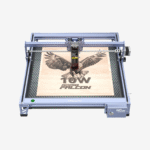
So Many Materials — Which One Actually Works for Your Project?
Walk into any serious maker space or engineering lab in India today and you’ll see spools of PLA stacked beside PETG, ABS, and Nylon — all for the same category of desktop printer. Then there’s resin, which works on a completely different principle. It’s easy to get confused, especially when every material claims to be the best for your application.
The truth is, there is no single best 3D printing material. There’s only the right material for a specific job. A jewellery prototype needs resin. A dashboard bracket needs ABS or ASA. A flexible phone bumper needs TPU. Getting this wrong wastes time, money, and print hours — so this guide cuts through the noise with clear, honest comparisons based on what actually matters for users in India.
Whether you’re buying your first spool or scaling up a workshop, you can explore our full range of 3D printing filaments and resins for 3D printing at 3D ProtoFarm — sourced from verified global brands, delivered PAN India.
Four Properties That Actually Determine the Right Material
Before comparing materials, here’s what you should actually be evaluating. Every material choice comes down to four things:
- Tensile strength — how much pulling or bending force the part handles before it snaps. Matters for brackets, gears, enclosures.
- Heat deflection temperature (HDT) — the temperature at which the printed part starts warping under load. Critical in Indian summers, automotive environments, and anything near electronics.
- Flexibility vs rigidity — some parts need to flex and return to shape; others need to hold dimensions under stress. These are opposite requirements.
- Print difficulty — some materials work on any open-frame FDM printer; others demand an enclosed chamber, moisture control, or a direct-drive extruder.
Keep these four in mind as you go through each material below. They make the trade-offs obvious.
PLA — The Starting Point for Every 3D Printer Owner
Polylactic Acid is the gateway material for a reason. It prints at low temperatures (190–220°C), sticks to almost any bed surface, doesn’t warp, and comes in every colour imaginable. For beginners, hobbyists, and anyone producing visual models or presentation pieces, PLA is hard to argue against.
It’s made from plant-based sources — corn starch, sugarcane — so it’s biodegradable under the right conditions and relatively low-odour during printing. Most popular FDM printers available in India, from entry-level Creality Ender models to high-speed Bambu Lab machines, are tuned for PLA right out of the box. You can see the range of 3D printing filaments including PLA in standard and specialty variants at 3D ProtoFarm.
Where PLA fails is in heat and impact. Its heat deflection temperature is around 60°C — meaning a PLA part left on a car dashboard during an Indian summer won’t survive the afternoon. It’s also brittle under repeated impact. Don’t use it for anything that needs to survive real-world stress.
Best for: Architecture models, presentation prototypes, educational parts, decorative prints, visual mockups.
PETG — The Practical Workhorse Most People Should Default To
Polyethylene Terephthalate Glycol — PETG — sits at the sweet spot between ease and capability. It’s tougher than PLA, heat-resistant up to 80°C, and naturally moisture-resistant. It also has good layer adhesion, which makes it more isotropic (consistently strong in all directions) than PLA.
PETG prints at 230–250°C and doesn’t require an enclosure. The main nuisance is stringing — it tends to ooze between travel moves if retraction isn’t dialled in — but once settings are sorted, it’s reliable and consistent. For functional parts that need to handle real-world use without full engineering-grade demands, PETG is the go-to.
It’s also popular for food-safe containers (with the right post-processing and food-safe spool certification), medical device housings, and transparent enclosures where PLA would crack under stress.
Best for: Functional brackets, water-resistant enclosures, mechanical housings, food-contact prototypes, structural supports.
ABS — High Performance but Demanding to Print
Acrylonitrile Butadiene Styrene has been the engineering thermoplastic of industrial 3D printing since the technology’s early days. It’s strong, impact-resistant, machinable, and has a heat deflection temperature of around 105°C — far more appropriate for automotive and industrial environments than PLA or PETG.
The most distinctive advantage of ABS is acetone vapour smoothing. By exposing ABS prints to acetone vapour for a controlled period, you get a near-injection-moulded surface finish — a technique that’s impossible with most other materials. For product development teams that need presentation-quality functional prototypes, this matters.
The downside: ABS is unforgiving to print. It shrinks as it cools, causing warping on larger parts — especially without an enclosed printer. You need a heated bed at 90–110°C and ideally a sealed chamber. Ventilation is non-negotiable; ABS releases styrene during printing. If you’re looking for a printer that can handle ABS reliably, check out enclosed FDM options in our 3D printing filaments section along with compatible ABS spools.
In India’s automotive corridors — Pune, Chennai, Faridabad — ABS is the standard for dashboard components, under-bonnet parts, snap-fit assemblies, and housings that need to survive engine heat.
Best for: Automotive components, consumer electronics housings, snap-fit assemblies, post-processed functional prototypes.
ASA — ABS Without the Outdoor Weakness
Acrylonitrile Styrene Acrylate is what ABS should have been for outdoor use. The core difference is UV stability: ABS fades, yellows, and becomes brittle under extended sunlight exposure. ASA doesn’t. Its UV resistance makes it the correct choice for any component that will live outdoors — regardless of whether it also needs heat resistance.
Think electrical junction boxes, outdoor signage, agricultural equipment parts, solar panel mounting hardware, and automotive exterior trim. For India specifically — with its intense solar radiation, monsoon humidity, and temperature swings between seasons — ASA performs significantly better than ABS for anything that exits the building.
Print behaviour mirrors ABS: same temperature range, same enclosure preference, same warping risk. The surface finish tends to be more matte than ABS, which often looks more intentional on industrial-facing parts.
Best for: Outdoor enclosures, automotive exterior trim, solar installation components, agricultural and garden hardware, electrical fittings.
Nylon — When the Part Needs to Actually Work
Polyamide (Nylon, or PA) is the point where 3D printing starts producing parts that genuinely compete with injection-moulded components. The mechanical profile is unique: it combines high tensile strength with real flexibility — it bends repeatedly without cracking. This makes it the natural choice for gears, hinges, living hinges, cable clips, and any moving mechanical part that undergoes repeated stress cycles.
In India’s manufacturing sector — engineering component suppliers in Pune, precision parts workshops in Coimbatore, jig-and-fixture makers across Gujarat — Nylon is valued for its wear resistance and fatigue life. It also performs well in SLS (Selective Laser Sintering) printing, which produces fully isotropic parts with no support structures and no layer-bonding weakness. Learn more about technology differences in our FDM vs SLA vs SLS comparison to understand which process suits your Nylon application.
The critical challenge with Nylon in India: hygroscopicity. Nylon absorbs moisture from humid air aggressively — and humid air is the default in most Indian cities, especially from June to September. Wet Nylon filament produces bubbly, weak, inconsistent prints. You must dry your spool at 70°C for 4–8 hours before printing, then print directly from a sealed dry box. Without moisture control, even expensive Nylon filament will underperform.
Best for: Gears, bearings, living hinges, jigs and fixtures, cable management, structural moving parts, SLS functional components.
TPU — When Flexibility Is the Entire Point
Thermoplastic Polyurethane is the rubber of the 3D printing world. It’s elastic, impact-absorbing, oil and abrasion resistant, and available in a range of Shore A hardness values — from very soft 85A to nearly rigid 98A. This lets you dial in exactly how stiff or compliant the final part should be.
In practical terms, TPU is used for phone cases, shoe insoles, custom gaskets, conveyor seals, vibration-dampening mounts, soft robotic grippers, and any component that needs to deform under load and bounce back. It’s one of the few 3D printing materials that can produce true end-use production parts at low volumes without any tooling. Browse our 3D printing filaments collection for TPU options — including Anycubic TPU 95A, a reliable mid-hardness choice for most flexible applications.
TPU has one operational quirk: it’s prone to buckling inside Bowden extruder setups because the flexible filament can coil inside the PTFE tube. A direct-drive extruder handles it far better. Print slowly — 20–35mm/s — and reduce retraction distance. Getting the settings right takes one or two calibration prints, but the output is genuinely useful.
Best for: Gaskets, seals, phone cases, wearables, conveyor components, soft robotic parts, vibration isolators, custom protective covers.
Resin — When Surface Detail and Precision Take Priority
Photopolymer resin — used in SLA, MSLA, and DLP printing — works on a completely different principle from FDM. Instead of extruding melted plastic, a UV light source cures liquid resin layer by layer, achieving surface resolution that filament printing cannot match. Layer heights of 25–50 microns, crisp edges, and smooth surfaces straight off the build plate. Our range of resins for 3D printing includes standard, ABS-like, and castable variants from Anycubic, Elegoo, and JAMG HE.
Standard resin is brittle — it’s not the right choice for parts that need to flex or absorb impact. But the engineering resin category changes that calculation. Anycubic ABS-Like Resin 3.0, for example, is designed to mimic the toughness of ABS plastic — drillable, tappable, and impact-resistant at resin-level surface quality.
For India’s jewellery industry in Surat and Rajkot, castable resin is particularly relevant. Investment casting from resin masters is now a standard production workflow — it eliminates traditional wax carving while producing casting patterns with better detail. JAMG HE castable resin is engineered specifically for this application.
Post-processing is mandatory with all resins: wash in isopropyl alcohol (IPA), then cure under UV light. Handle uncured resin with nitrile gloves — it’s a skin sensitiser. Ventilation matters here too, though less acutely than ABS.
Best for: Jewellery casting masters, dental models, miniatures, high-detail prototypes, medical anatomical models, precision mechanical components.
Material Comparison at a Glance
Use this table to compare the seven materials across the four properties that matter most:
| Material | Strength | Heat Resistance | Print Difficulty | Best For |
|---|---|---|---|---|
| PLA | Moderate | Low (60°C) | Very Easy | Prototypes & Models |
| PETG | Moderate-High | Moderate (80°C) | Easy | Functional Parts |
| ABS | High | Good (105°C) | Medium | Enclosures & Auto |
| ASA | High | Excellent (100°C) | Medium | Outdoor & UV Parts |
| Nylon | Very High | Good (110°C) | Hard | Gears & Bearings |
| TPU | Moderate | Moderate | Medium | Seals & Flex Parts |
| Resin | High | Moderate | Easy (SLA) | Jewellery & Dental |
How to Choose: Three Questions That Narrow It Down Fast
You don’t need to memorise every material property. Ask yourself these three questions and the right material usually reveals itself:
1. Will this part get hot?
If it’s near a heat source, inside a vehicle, outdoors in summer, or in any environment above 60°C — rule out PLA immediately. Choose PETG (up to 80°C), ABS or ASA (up to 105°C), or Nylon (up to 110°C) depending on how hot it gets and whether UV resistance matters.
2. Does it need to flex or hold rigid shape?
If the part needs to bend and return — gaskets, seals, straps, grips, bumpers — TPU is the answer. If it needs to hold precise dimensions under load — gears, structural brackets, enclosures — choose from PETG, ABS, ASA, or Nylon depending on heat and UV requirements.
3. How important is surface finish?
If the part needs to look near-perfect — jewellery master, dental model, presentation component — resin wins. If it’s internal or functional, FDM materials are faster and cheaper. For a full breakdown of when each printing technology is the right call, read our FDM vs SLA vs SLS comparison guide.
Things to Know as an Indian 3D Printing User
A few material considerations that are specific to the Indian context and often missed in global guides:
- Humidity kills Nylon and some TPU grades. Store all hygroscopic filaments in sealed containers with silica gel. During monsoon months, even a few hours of exposure can ruin a spool. A food dehydrator at 65–70°C for 6–8 hours before printing is the standard fix.
- PLA in summer vehicles is a failure waiting to happen. Car interiors in Gujarat, Rajasthan, and most of peninsular India easily hit 70–80°C in direct sun. Any PLA part inside a parked vehicle will warp. Use PETG at minimum.
- ABS and resin both need ventilation. ABS releases styrene fumes; uncured resin vapours are irritants. In small Indian workshops with limited airflow, this is a genuine health concern. A dedicated enclosure with an activated carbon filter makes a significant difference.
- Electricity cost matters for long Nylon and resin prints. High-temp materials need heated beds and chambers running for hours. Factor this into project pricing, especially for small commercial print services.
Conclusion
There’s no shortcut to getting material selection right — but there is a clear logic to it. Start with the operating environment. Then consider mechanical requirements. Then surface finish and production volume. That sequence narrows down your options quickly and prevents the most common and costly mistakes.
PLA for models. PETG for most functional parts. ABS or ASA when heat or UV exposure is involved. Nylon for serious mechanical components. TPU for anything that needs to flex. Resin when the surface has to be perfect.
3D ProtoFarm stocks genuine, verified materials from the world’s most trusted brands — available for PAN India delivery from Rajkot. Browse our complete 3D printing filaments collection, explore our resins for 3D printing, or visit our 3D printing services page if you’d rather have us print it for you.
Frequently Asked Questions
Which 3D printing material should a beginner start with?
PLA is the universal starting point. It’s forgiving, inexpensive, and works on virtually any FDM printer without special hardware or settings. Once you understand how your printer behaves with PLA, moving to PETG for functional parts is a natural next step.
What is the real difference between PLA and PETG?
PLA is easier to print and better for visual models, but it softens above 60°C and is brittle under impact. PETG is tougher, moisture-resistant, and survives up to 80°C. For anything that will actually be used — not just displayed — PETG is the more appropriate choice.
Why does ABS warp so much? Can it be fixed?
ABS shrinks as it cools, and uneven cooling causes warping. The fix is an enclosed printer that keeps ambient temperature stable, a bed heated to 90–110°C, and no drafts near the print. Brim or raft adhesion on the first layer also helps significantly for larger parts.
When should I choose ASA instead of ABS?
Any time the finished part will be exposed to sunlight or outdoor conditions. ABS yellows and becomes brittle within months of UV exposure. ASA has built-in UV stabilisation and maintains both colour and mechanical properties outdoors — which in India’s climate is a meaningful difference.
Why is my Nylon print coming out bubbly and weak?
Almost certainly moisture. Nylon absorbs humidity from the air quickly — often within a few hours of opening a new spool. Dry it at 65–70°C for 6–8 hours before printing, then print directly from a sealed dry box or airtight container with a desiccant feed.
Can I use a Bowden extruder for TPU?
Technically yes, but it’s difficult. TPU’s flexibility causes it to buckle and jam inside long Bowden tubes. A direct-drive extruder is strongly recommended. Also, print slowly — 20–35mm/s — and reduce retraction to near-zero to prevent the filament from bunching up.
Is resin printing safe for home use in India?
With precautions, yes. Uncured resin is a skin sensitiser and the vapours are irritants, so always use nitrile gloves and print in a ventilated space or with an activated carbon filter. Once prints are washed and fully UV-cured, the material is inert and safe to handle. Dispose of IPA wash liquid responsibly — don’t pour it down drains.
Where can I buy genuine 3D printing materials in India with reliable delivery?
3D ProtoFarm is based in Rajkot, Gujarat and offers PAN India delivery on a curated range of filaments and resins from verified global brands including Anycubic, Elegoo, Bambu Lab, and JAMG HE. Visit 3dprotofarm.in for the current catalogue and pricing.